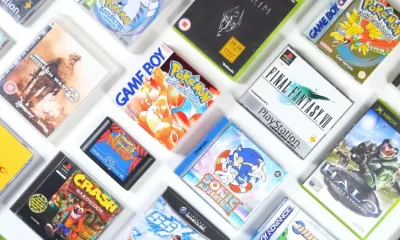
Remember when owning ten video games made you feel positively spoiled? Maybe you had Sonic the Hedgehog permanently lodged in the Mega Drive, Street Fighter II waiting nearby for when somebody came over, and a couple of cartridges you’d already finished so many times that you could find all the easter eggs playing backwards with your eyes closed.
Sure, we had small gaming libraries, but all those individual games mattered. Getting a new one was an event… and it only happened a few times a year at most.
Nowadays, we’re all logging into the likes of Steam and Game Pass. But have you ever sat down and counted the total number of games you’ve got access to?
There are likely hundreds sitting there, waiting for you to choose them. Maybe even thousands, if your Steam account’s been quietly accumulating questionable sale purchases over the past decade.
In 2026, playing digital games is very much like trying to watch a good TV show on Netflix or Amazon Prime. Most of the time, we’re turning the machine on without even having a specific game in mind. Instead, we rummage around, reading synopsis after synopsis, and work it out from there.
When exactly did playing video games become more about the gaming library than the game itself?
Casino Gaming Was Building Libraries Before The Rest Of Us
A really big clue about what prompted all that shift can be found in a surprising corner of the gaming industry. Back in the 1990s, while most home gamers were still swapping cartridges and arguing over whose PlayStation memory card it actually was, online casino gaming was out there being a veritable pioneer.
One of the earliest documented online platforms launched as far back as 1995, with no less than 18 different games available through the service. Pretty radical, right?
Over in mainstream gaming, the original PS had barely launched in North America, while the Nintendo 64 was still on the horizon. A live-service title like Fortnite might as well have been a concept dreamed up for a sci-fi movie.
Fast-forward three decades and that early experiment has grown into a full-fledged global sector. We’ve got casino classics, crash games, poker, and slots all sharing the same wider lobby, giving players an overwhelming array of choice… sound familiar?
And, of course, these libraries haven’t just got bigger; they’ve got weirder and more technically ambitious too. Take a look at the mBit casino games library, and you’ll see not just familiar casino games, but crypto-first systems that would’ve sounded completely alien to anyone logging into one of those first online casinos in the ’90s.
Interestingly, though, even in this sector, the individual games themselves still very much seem to be the point. Roulette’s still roulette, for instance. Blackjack still revolves around beating the dealer by reaching 21 first. But there have been all sorts of mechanics built around the core gameplay that have allowed those familiar formats to keep growing without losing what made them work in the first place.
Then Our PC Libraries Got Completely Out Of Hand
For a while, PC gaming followed the same approach. Then, everything got out of hand!
How many games are sitting untouched in your Steam library right now? Ten? Fifty? Are we into triple figures and pretending not to notice?
Digital storefronts simply waived all the limitations and accessibility issues of stores and shelves, while an almost continuous trip of sales and offers made adding one more title just so, so easy.
What’s that? More choice?
Enter: Xbox Game Pass and PlayStation Plus, the leading lights of subscription services!
Nobody at Microsoft is expecting gamers to sign up just because of one particular title. The appeal of the service is in having an enormous collection there at the click of a mouse that can cover every type of genre and gameplay experience imaginable.
Of course, even browser games have been pretty much following the same principle—only without demanding the hard-drive space.
But all of this, though, was bound to have an impact on how we play. And that might just be the whole point…
Back when your collection consisted of whatever cartridges happened to be in the bedroom drawer, giving up on a game after twenty minutes wasn’t always much of an option. If Battletoads was making you miserable, bad news: you probably had more Battletoads in your immediate future.
Now, if the RPG you started yesterday isn’t grabbing you, what happens? You jump into a racer, or there’s a deckbuilder you’ve been meaning to try. Maybe you finally open that obscure roguelite you have absolutely no memory of purchasing.
More Games Isn’t Killing The Old Ones
So, in the age of overconsumption and endless choice, does having thousands of games at our fingertips mean the older formats that can’t be neatly packaged into a splash screen are done for?
Not really.
If anything, in this climate, they’re granted more room to evolve. It’s why the simple 3-reel video slot’s been able to morph into a bleeding-edge live dealer experience. And why Fortnite has grown from one battle royale into a wider collection of creator-made worlds.
The size of the library definitely isn’t spelling the end of games as we know them. Instead, it’s giving us so many different ways to keep playing the games we love.

- Will Gaming Libraries Be The End of Games?
- When the Reels Stop: What Fast Casino Payouts Really Mean in 2026
- Why Catching Pokemon in ROM Hacks Feels Exciting
- Why Pokemon Cloud White’s Random Encounters Hook You
- From Game Gear to Browser Fun
- Why Mario Kart Nights Paired With Comfort Food
- How Fan-Made Pokemon ROM Hacks Build Communities
- The Quiet Math Behind The Minish Cap
- What Can Sweepstakes Casinos Learn From the Design Philosophy of Retro Games?
- From High Scores to Real-Time Predictions: A New Era of Digital Competition
- Game Boy Advance Nostalgia Meets Mobile Play: What Handheld Gaming Taught Us About Playing on the Go
- What the 90s Did For Gaming – A Revolutionary Era
- Why Retro Games Feel Right at Home in a Browser
- From Retro Slots to Browser Games: Why Simple Reward Loops Last
- The worst American football-themed video games ever made
- The Card Games That Taught Computers to Play
- When the Arcade Cabinet Was Part of the Game
- Bonus Stages in Modern Slots Have More in Common With Arcade Games Than You Think
- Hidden Chance Games Inside Classic SNES Titles
- Five Games for When You Just Want to Play
- The Real Market Behind Virtual Retro Goods
- How Clear Navigation Enhances Player Exploration in Digital Casinos
- Why Hardware Limits Made Retro Games Better Designed
- The Impact Of Retro Gaming On Adjacent Entertainment Sectors
- How Pixel Art Became Cool Again
- They All Started With Retro Games But Left the Biggest Impact in Esports
- The Coin-Collecting Thrill of Super Mario World
- How Mario Kart’s Item Box Won Players Over
- When Retro Games Hid Tiny Slot Machines
- Retro Gamers Keep Reviving Classic PlayStation Titles Through Browser Emulation
- Why Fast-Start Design Still Wins in Retro Gaming
- How Old-School Basketball Games Built a New Generation of Fans
- Pokemon Cloud White’s Wild Grass Surprises
- How 80s Arcade Design Powers Modern Games
- How Fearless Draft Is Reshaping Professional League of Legends
- How Super Mario RPG’s Timed Hits Shine
- How to optimize your browser for lag-free retro gaming in 2026
- The Technical Magic Behind Retro Gaming’s Most Massive Worlds
- How Gold Slot Themes Add Familiar Casino Style
- What Actually Happens on the Convention Floor Wi-Fi at a Retro Gaming Expo
- Why Hidden Unlockables Made Games More Memorable
- The Death of Cheat Codes and What Replaced Them
- Why Retro-Themed Slot Games Are Thriving in Ontario’s Licensed iGaming Market
- The Best Retro-Themed Online Slot Games Available Today
- How Arcade Classics Shaped the Design of Modern Online Slot Games
- Why Retro Games Still Read Better at a Glance
- The gaming market is booming and it’s bigger than you think
- How Secret Pro Player Stats Reveal The Most Broken Meta Picks You Should Abuse Today
- High Score Culture and Friendly Competition in Classic Arcade Gaming
- Why Fruit Symbols Remain Common in Slot Themed Video Games