Some games need an hour before they begin to make sense.
Retro games rarely had that luxury.
You pressed start, moved left or right, jumped, punched, raced, shot, dodged, or collected something. That was usually enough. The rest came from playing, failing, trying again, and slowly getting better. No long setup. No account wall. No ten-minute tutorial explaining what the buttons do.
That “fast start design in games” feeling is one of the reasons retro gaming still works today. It is not only nostalgia. It is design. Older games were built around immediate action because they had to be. Arcade cabinets needed people to understand the idea quickly. Console games had limited storage, smaller screens, and simpler controllers. Designers could not hide weak ideas behind endless menus or cinematic introductions.
The Smithsonian’s video game history archive traces early electronic game experiments back to Ralph Baer’s prototype work in the 1960s, showing how simple interaction was part of gaming from the start.
The funny thing is, this old design habit feels more useful now than ever. Modern players are surrounded by choice. A game that respects time can stand out just by letting people begin.
Fast-Start Game Design
Fast start game design is simple. The player understands what to do almost as soon as the game begins.
That does not mean the game itself is shallow. It means the entry point is clear.
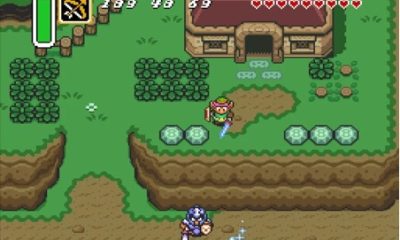
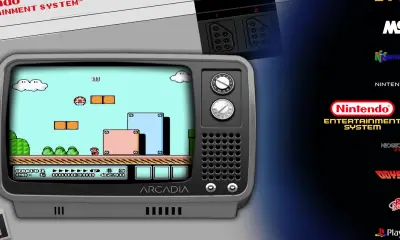
Think of early platformers. A player sees a character, a path, a gap, and maybe an enemy walking toward them. Without a speech box, the game teaches movement, timing, and danger. The first few seconds do the work that many modern games now stretch across tutorial screens.
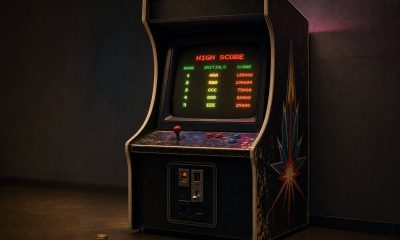
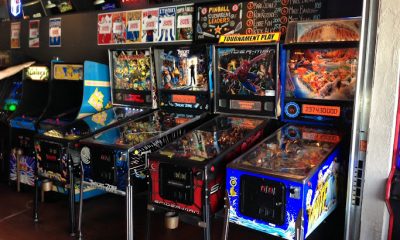
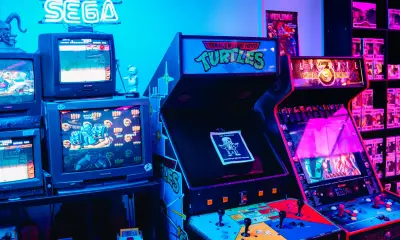
Arcade games were especially good at this. Their business model depended on it. Someone walking past a cabinet had to understand the appeal quickly. A racing game showed a track. A fighting game showed two characters. A puzzle game showed falling blocks. The player did not need a manual to get the basic idea.
That clarity still matters. Many people play games between other parts of life. They may not want to study systems before having fun. Retro games fit that mood well because they remove the warm-up period.
You start. You play. The game earns your attention by doing something, not by promising that it gets good later.
Simple Controls In Retro Game Design
One of the strongest parts of retro game design is control simplicity.
A small set of buttons forced designers to make each action matter. Jumping had to feel right. Turning had to feel responsive. Attacking had to be readable. If the controls were poor, there was nowhere to hide.
This is why many old games still feel good even when the graphics look dated. The player’s hand understands them quickly. There is a direct link between button press and result.
That directness creates trust.
When a player misses a jump in a good retro game, they usually know why. They pressed too late. They rushed. They misread the enemy pattern. The game may be hard, but it often feels fair. That matters because frustration is easier to accept when the rules are clear.
Modern games sometimes overload players early. Skill trees, equipment screens, crafting tabs, map markers, currencies, pop-ups, and upgrade paths can all appear before the core loop has settled. Some players enjoy that depth. Others bounce off before reaching the fun.
Retro games remind designers that depth does not need to arrive first. Let the player feel the game before asking them to manage it.
Instant Gameplay Design
The first playable screen in a retro game often works like a silent teacher.
It shows the world. It hints at the rules. It gives the player a safe way to test movement before the real pressure begins. This is good design because it teaches through contact, not explanation.
A strong first screen usually answers three questions:
- What can I do?
- What can hurt me?
- What should I try next?
This is also why retro games are easy to revisit after months or even years. You do not need to remember a long control scheme or where you left off in a complex quest log. You can simply return and let the game’s structure pull you back in.
Fast-start design is not just about new players. It also helps returning players. A game that is quick to re-enter becomes part of a person’s casual routine. That is why browser-based retro gaming still has a place. The experience does not ask for much before giving something back.
Clear Rules And Replay Value
Retro games have a reputation for being tough. Some of that reputation is deserved.
Old platformers, shooters, beat ’em ups, and arcade games could be unforgiving. Lives were limited. Checkpoints were sparse. Enemies followed patterns that had to be learned through repetition. A single mistake could cost the run.
Yet many players still return to them.
The reason is not only challenge. It is clarity.
A hard game can still feel satisfying when the player understands the rules. You can see the hazard. You can learn the timing. You can improve with each attempt. The game does not need to explain everything because the feedback is immediate.
This kind of difficulty works especially well with fast-start design. Since the player can restart quickly, failure feels less heavy. Losing a round or a life does not mean going through five loading screens and three cutscenes. You are back in action almost immediately.
That loop is powerful.
Try. Fail. Restart. Improve.
It is one of the oldest rhythms in gaming, and it still works because it respects the player’s desire to keep moving.
Classic Retro Gaming Mechanics
A good retro game usually has a clean loop.
In a platformer, you move through a level, avoid danger, collect items, and reach the end. In a fighting game, you read the opponent, attack, defend, and adapt. In a puzzle game, you arrange pieces, clear space, and chase a better score.
The loop is easy to describe. That is a strength.
When a game’s loop is clear, players can decide quickly whether they enjoy it. They do not need to wait for the game to reveal itself after several hours. The appeal is right there.
This is where retro design connects with wider gaming habits today. Many popular games, from mobile titles to browser games, rely on short, repeatable loops. The format is different, but the principle is familiar. Players often like experiences that can be started quickly, understood quickly, and replayed without much friction.
Retro gaming also shaped the way people understand quick-play formats beyond console and arcade games. Many casual gaming formats still borrow from the same basic ideas: familiar symbols, short rounds, clear feedback, and themes that are easy to recognise in seconds. That is why retro-inspired artwork, arcade-style sounds, and simple reward loops often appear across adjacent gaming spaces, including themed browser entertainment and online slots with Lucky Circus, where the appeal sits more in fast entry and familiar visual cues than in long setup.
Retro Games For Home Gaming Nights
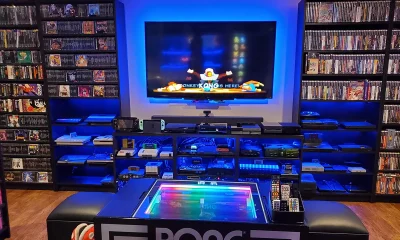
Retro gaming also fits naturally into social settings because it does not take long to explain.
Someone can hand over a controller and say, “Press this to jump,” or “Don’t touch that enemy,” and the next person is already playing. That matters during casual home gaming nights, especially when people are switching between matches, watching others play, or taking turns.
A tournament-night setup often has little pockets of downtime between matches, and some people use those gaps for snacks, score checks, quick browser games, or themed online slots with Lucky Circus when the room already has a wider game-night feel.
The point is not that every form of gaming is the same. It is that fast-start entertainment fits the stop-start rhythm of social play. People drift in and out. Someone loses a round. Someone else takes over. A game that needs little explanation works better in that kind of room.
Retro games have always been good at this. They are easy to watch and easy to join. Even someone who is not playing can understand what is happening on screen. That shared readability is part of their charm.
Pixel Art And Visual Clarity
Retro games did not have the visual freedom that modern games enjoy.
Sprites were small. Colour palettes were limited. Animation frames had to be used carefully. Backgrounds could not be overloaded. Sound design had to be memorable within strict limits.
These restrictions made clarity essential.
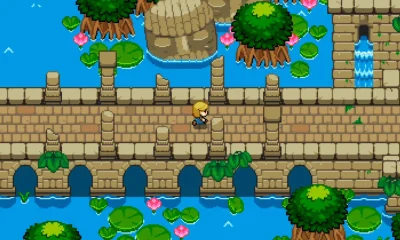
A player needed to recognise the main character instantly. Enemies had to be readable. Hazards had to stand out from the background. Collectibles had to look worth collecting. Every visual choice had a job.
This is one reason pixel art still has influence today. It is not just a style. It is a way of organising information. Good pixel art tells the player what matters without cluttering the screen.
Modern designers can learn from that. Better graphics do not always mean better communication. Sometimes a simpler visual language helps the player feel more connected because the screen is easier to understand.
Retro games often looked simple because they had no choice. But that simplicity became part of their strength.
Retro Game Sound Design
Fast-start design is not only visual. Sound plays a huge role too.
Classic games often used short, memorable audio cues. A coin sound. A jump sound. A hit sound. A level-start jingle. A warning beep. These sounds told the player what happened before they had time to think about it.
Good sound creates rhythm. It makes actions feel sharper. It helps players understand success, danger, and progress.
Retro games used sound economically. They could not fill every moment with layered audio, so the important sounds had to stand out. That made feedback cleaner.
The result is that many retro games still feel alive within seconds. You hear the first note, the first effect, or the first action cue, and the game’s identity returns.
That is another part of fast-start design. It does not wait for the player to settle in. It creates recognition immediately.
Retro Design In Modern Games
Many modern games still use retro-style fast-start principles, even when they look nothing like old arcade titles.
Indie platformers often teach through level layout. Roguelikes use fast restarts and clear loops. Puzzle games introduce one idea at a time. Mobile games rely on instant input and short sessions. Browser games keep the distance between landing and playing as short as possible.
This shows that fast-start or instant gameplay design is not outdated. It is flexible.
The mistake is assuming retro design means old-fashioned design. In reality, many retro games solved problems that modern designers still face. How do you teach quickly? How do you keep the first minute interesting? How do you make replay feel natural? How do you reduce friction without removing depth?
These questions are still relevant.
A game may have modern graphics, online features, and complex systems, but if the first few minutes feel slow or confusing, players may leave before the best parts appear. Retro games understood that the beginning is not a formality. It is the hook.
Why Retro Games Are Still Popular
Nostalgia is real, but it does not explain everything.
People return to retro games because they are easy to start, easy to understand, and often hard to master. They offer a clean kind of play that feels different from many modern experiences. There is less management. Less waiting. Less noise around the actual game.
That does not make retro games better than modern games. It simply makes them useful in a different way.
They remind us that strong design can be direct. A game does not always need to be huge to be memorable. It does not need a long intro to feel complete. It does not need complex systems to create tension, excitement, or replay value.
Sometimes the best design is the one that gets out of the way.
Fast-start design wins because it respects the first few seconds. Retro games understood that those seconds matter. They still do.
FAQs
What is fast-start design in gaming?
Fast-start design means a game lets players understand and begin playing quickly. It usually uses simple controls, clear goals, immediate feedback, and minimal setup before the first playable moment.
Why do retro games still feel fun today?
Retro games often rely on clean mechanics, quick restarts, readable visuals, and strong replay loops. These qualities still work because they make games easy to enter and satisfying to revisit.
Is fast-start design only useful for simple games?
No. Even complex games can use fast-start design by introducing one strong idea first. Depth can come later, after the player understands the basic loop.
How did arcade games shape fast-start design?
Arcade games had to attract attention quickly and make sense within seconds. This pushed designers to create clear screens, simple inputs, strong feedback, and replay-friendly loops.
What can modern game designers learn from retro games?
Modern designers can learn the value of clarity, short onboarding, readable visuals, responsive controls, and strong first-minute design. Retro games show that a player should feel the game before being asked to learn too much about it.
Suggested keyword intent map
| Intent Group | Keywords To Check In Ahrefs | Best Use In Article |
| Core informational | fast start design in games, fast start game design, instant gameplay design | Main topic and intro |
| Retro gaming design | retro game design, why retro games are still popular, retro gaming mechanics | H2s on simplicity, controls, replay |
| UX/design angle | game onboarding, simple game mechanics, low friction game design | Sections on menus, tutorials, first screen |
| Browser gaming angle | play retro games online, browser retro games, instant retro games | Soft relevance to PlayRetroGames |
| Adjacent gaming mechanics | slot game mechanics, themed slots, casino game design, reward loops in games | One natural anchor bridge only |
| Long-tail supporting | why old games are still fun, why arcade games are addictive to replay, retro games simple controls | FAQs and supporting paragraphs |

- Game Boy Advance Nostalgia Meets Mobile Play: What Handheld Gaming Taught Us About Playing on the Go
- What the 90s Did For Gaming – A Revolutionary Era
- Why Retro Games Feel Right at Home in a Browser
- From Retro Slots to Browser Games: Why Simple Reward Loops Last
- The worst American football-themed video games ever made
- The Card Games That Taught Computers to Play
- When the Arcade Cabinet Was Part of the Game
- Bonus Stages in Modern Slots Have More in Common With Arcade Games Than You Think
- Hidden Chance Games Inside Classic SNES Titles
- Five Games for When You Just Want to Play
- The Real Market Behind Virtual Retro Goods
- How Clear Navigation Enhances Player Exploration in Digital Casinos
- Why Hardware Limits Made Retro Games Better Designed
- The Impact Of Retro Gaming On Adjacent Entertainment Sectors
- How Pixel Art Became Cool Again
- They All Started With Retro Games But Left the Biggest Impact in Esports
- The Coin-Collecting Thrill of Super Mario World
- How Mario Kart’s Item Box Won Players Over
- When Retro Games Hid Tiny Slot Machines
- Retro Gamers Keep Reviving Classic PlayStation Titles Through Browser Emulation
- Why Fast-Start Design Still Wins in Retro Gaming
- How Old-School Basketball Games Built a New Generation of Fans
- Pokemon Cloud White’s Wild Grass Surprises
- How 80s Arcade Design Powers Modern Games
- How Fearless Draft Is Reshaping Professional League of Legends
- How Super Mario RPG’s Timed Hits Shine
- How to optimize your browser for lag-free retro gaming in 2026
- The Technical Magic Behind Retro Gaming’s Most Massive Worlds
- How Gold Slot Themes Add Familiar Casino Style
- What Actually Happens on the Convention Floor Wi-Fi at a Retro Gaming Expo
- Why Hidden Unlockables Made Games More Memorable
- The Death of Cheat Codes and What Replaced Them
- Why Retro-Themed Slot Games Are Thriving in Ontario’s Licensed iGaming Market
- The Best Retro-Themed Online Slot Games Available Today
- How Arcade Classics Shaped the Design of Modern Online Slot Games
- Why Retro Games Still Read Better at a Glance
- The gaming market is booming and it’s bigger than you think
- How Secret Pro Player Stats Reveal The Most Broken Meta Picks You Should Abuse Today
- High Score Culture and Friendly Competition in Classic Arcade Gaming
- Why Fruit Symbols Remain Common in Slot Themed Video Games
- Maine: Shaping US iGaming Further
- The Role of Player Opinions in Creating Long-Lasting Games
- Gamification is changing online casinos and online games in a big way
- Red Is the New Gold: How Covert Skins Became the New Core of the CS2 Economy
- Why classic fruit symbols and lucky sevens outlived the hardware of early physical machines
- From Arcade Tokens to Digital Coins: How Coin-Op Gaming Grew Up
- Why Pokemon Cloud White’s Random Encounters Feel So Thrilling
- How Pokemon ROM Hacks Like Cloud White Built Their Appeal on Pure Randomness
- How Pokemon Cloud White and GBA Fan-ROMs Brought Luck-Based Minigames Back to Retro Play
- The Hidden Game Corners of Pokemon, Super Mario RPG, and Final Fantasy