Before October 2025, knives and gloves controlled the CS2 skin economy. Items like Butterfly Knife, Karambit, and M9 Bayonet kept high prices as players could only get them from cases. On October 23, 2025, Valve changed the system through the Re-Retakes update. Players gained the ability to exchange five Covert skins for one knife or pair of gloves from the same collection. The market reacted immediately. Knife prices dropped across every major marketplace, Covert skins increased in price within hours, and traders started moving inventory away from knives into red skins. Since that update, Covert skins have become one of the main pricing drivers across the CS2 economy.
The Update That Changed Everything
Valve changed the CS2 economy on October 23, 2025 through the Re-Retakes update. The patch expanded Trade Up Contracts and connected Covert skins directly to knife and glove crafting for the first time:
- Five Covert items could be exchanged for one knife or pair of gloves from a collection tied to the input skins
- Five StatTrak Covert items could be exchanged for one StatTrak knife
- Covert skins from Fracture collections quickly moved above $14 as players targeted Skeleton Knife crafts
- The overall CS2 skin market moved from roughly $6.1 billion to $3.4 billion during the first market reaction
- Most mid tier knives lost a large part of their value during the first days after the update
- Rare collector items like Karambit Blue Gem patterns only moved down by around 10% to 15% as demand for unique finishes stayed strong
Traders described the first market reaction as the biggest pricing shift in Counter Strike history. Valve introduced the feature through a single patch note line without announcements or teasers. Some players started selling the knives immediately, while others rushed into the Covert skins before prices adjusted. The result still depended on the selected collections, float values, and random knife or glove outcomes.
Why Covert Skins Are the New Knives
Pricing Started Following Craft Costs
Before the October 2025 update, the Covert skins were simply the rarest weapon skins inside the CS2 cases. They were expensive and popular, though the knives and the gloves still controlled the top of the market. After Valve added knife trade ups, the pricing logic changed. Traders started valuing the knives through the cost of the five Covert skins required for knife crafts. The market started valuing the knives through the cost of the input skins.
Covert Skins Became Core Trading Assets
The Covert skins from collections like Dreams & Nightmares, Fracture, and Revolution became core trading assets after the update. Traders started treating them as liquid investment assets with stable demand and a visible floor price. Their prices now directly influence the value of the knives and the gloves tied to those collections, which made the red skins part of the core CS2 trading economy.
Float Became Part of the Crafting Economy
The update also increased the importance of float values. The float of the input Covert skins now affects the float of the resulting knife or gloves. This created a new niche focused on finding the Covert skins with specific float ranges for low wear knife crafts, especially for Factory New and Minimal Wear outcomes.
The Market Six Months Later
Mid Tier Knives Stopped Following the Old Market Logic
By May 2026, the CS2 skin market had recovered to roughly $6.4 billion after losing around $2.4 billion during the first 48 hours following the October 2025 update. The Covert skins stabilized above their pre-update prices, though still below the first panic spike after knife trade ups launched. The biggest changes stayed in the mid tier knife market. Models like the Gut Knife, the Falchion Knife, the Navaja Knife, the Shadow Daggers, and the Survival Knife no longer held value through rarity alone. Their prices started stabilizing around the cost of the Covert skins used for crafts, which created a visible floor price across many collections.
Rare Patterns Continued Holding Demand
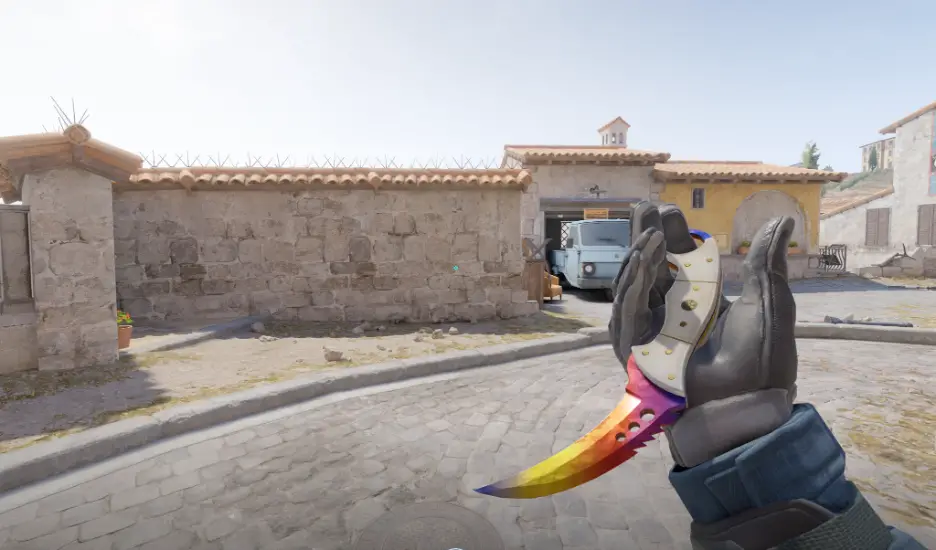
The market started separating standard knife finishes from rare patterns much more aggressively after the update. Standard Doppler phases, Tiger Tooth finishes, and Marble Fade knives stopped receiving the same demand they had before October 2025, while rare patterns and finishes continued holding strong prices. The Butterfly Knife, the Karambit, and the M9 Bayonet models with the Blue Gem, Ruby, Sapphire, and Emerald finishes recovered more successfully as their prices depended on collector demand, animations, and rare patterns instead of standard crafting supply. Traders also shifted from knife flipping toward Covert arbitrage, while trade up EV calculators using Steam Market prices became common tools for traders after the update. Players tracking profitable knife crafts now spend more time studying which skins keep stable demand across active collections.
What This Means Going Forward
Armory rotations now directly affect the Covert market inside CS2. Once a collection leaves the Armory, the supply of its Covert skins stops growing, the prices increase, and crafting knives from that collection becomes more expensive. The April removal of Train 2025 and Sport & Field already showed this cycle in action.
IEM Cologne 2026 is also expected to increase activity around the cases and the skins as Major tournaments traditionally bring more players back into CS2, which creates more crafting activity and more pressure on the Covert skins. The May 21 Souvenir-O-Matic update adds another layer to this pressure. Players can now turn any weapon from their inventory into a souvenir version tied to a specific match and player — and the cost of that craft depends on the value of the Gold team and player stickers selected, plus the rarity of the base weapon. This means Covert skins now feed two separate demand systems at once: knife and glove crafting through Trade Up Contracts, and souvenir weapon crafting through the Major Shop. Both pull from the same pool of red skins.
The upcoming Cache Collection may create another wave of cheap Covert skins at launch as supply will initially stay high. For traders, that creates a possible entry window before crafting demand pushes prices higher. Red skins are no longer just rare drops in CS2. They’re now part of the crafting economy — and with Souvenir-O-Matic live, that role just expanded further.
The Next Shift Starts With Supply
The next major changes in the CS2 economy will likely come from collection rotations and new sources of the Covert skins instead of from the knives themselves. Every new Armory release now affects crafting costs, collection demand, and trading activity almost immediately after launch. Future updates can now change the market much faster than before October 2025. A single collection with strong Covert skins can create a completely different pricing cycle across multiple knife finishes and trade up paths. The market already adjusted once to the new system. The next adjustment will depend on which collections enter the crafting economy next.