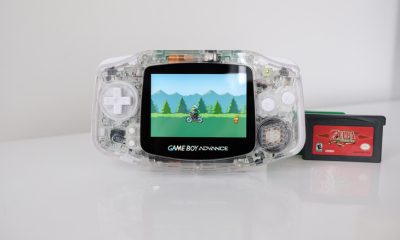
I still remember the specific weight of a Game Boy Advance cartridge. You bought it once, slotted it in, and the whole thing was yours. Every route, every cave, every monster waiting in the tall grass. Nobody charged you again at the Pokémon Center.
That memory has been bouncing around my head since the Pokémon Company published the October 2026 producer letter for TCG Pocket, which teases a new series landing at the end of the month. Two very different ideas of what “gotta catch ’em all” means, sitting 20 years apart. So let’s line them up.
The Cartridge Promise: Finite, Fair, Finished
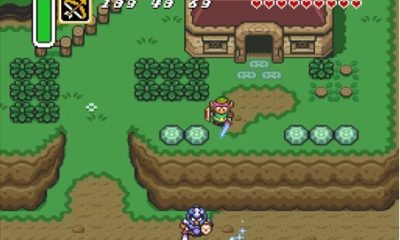
Take a game like Pokémon Cloud White, one of the most-played GBA titles on our own shelves, or the classic Ruby and Sapphire era it descends from. The deal is simple. The Pokédex has a fixed number of entries. Some are hard to find, some need a trade with a friend and a link cable, and a couple demand real patience. But the ceiling is visible from day one.
You could look at the dex and know exactly how far you had to go. A rare spawn might eat an evening of tall-grass wandering, but the effort converted into progress. Time in, creature out. That is the whole contract.
Trading was the social glue. You carried a cable (or knew a kid who did), and a swap happened between two players standing next to each other. Nobody gated it behind a currency. Our GBA library is full of games built on that same logic: you pay once, you explore, you finish.
The Pocket Loop: Open, Reveal, Repeat
TCG Pocket flips the structure. You get free packs on a timer, you swipe to open them, and the dopamine lives in the reveal. Pokémon’s own collecting guide describes how pack stamina, pack points and Wonder Picks shape the rhythm. Come back in a few hours, open another, check your haul.
The money side is the part that would have baffled my teenage self. In March 2026 the game was reported to have passed $1.49 billion in lifetime revenue, making it the top-grossing mobile card battler ever. A cartridge sold once. A pack loop sells forever.
And the finish line moves. New sets arrive, new rarities appear, and “complete” becomes a temporary state. The fixed Pokédex taught you to chase a ceiling. Pocket teaches you to chase a horizon.
Pacing: Who Controls the Clock?
On GBA, I controlled the clock. A bad evening meant I played longer. A great evening meant I finished a gym and went to bed. The game never nudged me.
Pocket hands the clock to the game. Packs refill on a schedule, so the best strategy is to check in repeatedly through the day. That is a smart design for retention, and it is genuinely fun in short bursts. But it is a different relationship. The old model rewarded a long, absorbed session. The new one rewards frequency.
There is a trade-off I want to be fair about. Pocket is easy to pick up for ninety seconds on a bus, and the free daily packs mean a patient player can build a real collection without spending. A GBA cartridge needed a console, a battery and a free afternoon. Convenience is a real feature, not just a monetisation trick.
Randomised Rewards and Published Odds
Here is where the two eras differ most. In a GBA game, randomness was a texture. An encounter table decided which creature rustled out of the grass, but the effort you spent always chipped toward a known finite goal.
In a pack game, randomness is the product. The thing you are buying (or earning) is the chance of something rare, which is why the odds matter so much. Regulators and platforms have pushed publishers toward disclosing drop rates, so you can see the pull rate for a rare card before you commit your time or money. Knowing the odds does not change the odds, but it turns a mystery into an informed choice.
The same transparency logic is the backbone of random-outcome games for adults. Slot machines and table games publish return-to-player figures, and that is what lets players compare one game with another. For Kansas players, casinos available in Kansas are covered in a ranked list of online casino sites, a useful reference for adults who like chance-based play. It is a separate world from a trading card app, but it shares the same core question: how clearly does a game tell you what the odds are?
Pocket’s trading system shows how a design choice can reshape a whole community. The token-gated swaps drew enough fan complaints that the developers changed trading after the backlash. Compare that to a link-cable swap that cost nothing and you can feel how far the philosophy has drifted.
Rarity: Earned in the World vs Granted by the Pack
A rare Pokémon on a cartridge was rare because the world made it so. You earned a legendary by finishing a story, solving a puzzle or surviving a long dungeon. The scarcity had a narrative reason, and the payoff felt like a story beat.
A rare card in Pocket is rare because a probability table says so. The shimmer on a full-art pull is gorgeous, and the hit when it appears is real. But the rarity comes from a roll, not from anything you did in a world. That is not worse, exactly. It is a different kind of excitement, closer to unwrapping a physical booster pack at a kitchen table than to beating the Elite Four.
One honest annoyance: the duplicates. Pulling the same common card for the fourth time stings in a way a missed encounter never did, because the loss feels like the game’s decision rather than your own bad luck.
Which One Respects Your Time More?
I will pick a side. For depth, the cartridge wins by a mile. A single GBA Pokémon game gives you a story, a map, a team to build and a finish line, for one price, and it asks nothing of your schedule. Ten hours in, you feel like you accomplished something.
For casual, low-effort fun, Pocket wins. It slots into the gaps of a day better than any handheld ever could, and the card art is a joy. The honest verdict is that they are not really competitors. They serve different moods, and the mistake is expecting a pack loop to deliver the satisfaction of a finished world.
If you want to feel that old satisfaction again, our Game Boy Advance collection runs in your browser with nothing to download. Start a fresh save and see how long you last before you check the Pokédex count.
FAQ
Is Pokémon TCG Pocket free to play? Yes, you can earn packs for free on a recurring timer and build a collection without spending. Paid options exist for opening more packs faster, but patient players can progress without paying, and the free route simply takes longer.
Can you complete the Pokédex in GBA Pokémon games? Usually yes, though some entries need trades with another player or a second game version. The total is fixed, so you always know how many are left, which is the biggest difference from an ever-expanding card set.
Why does Pocket’s collecting feel so different? Packs sell the chance of something rare rather than a fixed goal. Pulls come from probability tables, new sets keep arriving, and progress is paced by timers, so the feeling is closer to opening booster packs than finishing a quest.
Can I still play GBA Pokémon games today? Yes. Browser emulation lets you play classic GBA titles on a laptop or phone with no cartridge or console needed. Games like Pokémon Cloud White are among the most played on retro portals, so there is an active community around them.
Which is better for kids? A cartridge is a safer fit for younger players, since there are no timers and no in-game purchases. Pocket suits older kids and adults who want short sessions, ideally with a parent keeping an eye on spending settings.

- Pokémon TCG Pocket vs GBA Pokémon: How Collecting Loops Changed in 20 Years
- 4 arcade mechanics that quietly explain how sweepstakes games work today
- Will Gaming Libraries Be The End of Games?
- When the Reels Stop: What Fast Casino Payouts Really Mean in 2026
- Why Catching Pokemon in ROM Hacks Feels Exciting
- Why Pokemon Cloud White’s Random Encounters Hook You
- From Game Gear to Browser Fun
- Why Mario Kart Nights Paired With Comfort Food
- How Fan-Made Pokemon ROM Hacks Build Communities
- The Quiet Math Behind The Minish Cap
- What Can Sweepstakes Casinos Learn From the Design Philosophy of Retro Games?
- From High Scores to Real-Time Predictions: A New Era of Digital Competition
- Game Boy Advance Nostalgia Meets Mobile Play: What Handheld Gaming Taught Us About Playing on the Go
- What the 90s Did For Gaming – A Revolutionary Era
- Why Retro Games Feel Right at Home in a Browser
- From Retro Slots to Browser Games: Why Simple Reward Loops Last
- The worst American football-themed video games ever made
- The Card Games That Taught Computers to Play
- When the Arcade Cabinet Was Part of the Game
- Bonus Stages in Modern Slots Have More in Common With Arcade Games Than You Think
- Hidden Chance Games Inside Classic SNES Titles
- Five Games for When You Just Want to Play
- The Real Market Behind Virtual Retro Goods
- How Clear Navigation Enhances Player Exploration in Digital Casinos
- Why Hardware Limits Made Retro Games Better Designed
- The Impact Of Retro Gaming On Adjacent Entertainment Sectors
- How Pixel Art Became Cool Again
- They All Started With Retro Games But Left the Biggest Impact in Esports
- The Coin-Collecting Thrill of Super Mario World
- How Mario Kart’s Item Box Won Players Over
- When Retro Games Hid Tiny Slot Machines
- Retro Gamers Keep Reviving Classic PlayStation Titles Through Browser Emulation
- Why Fast-Start Design Still Wins in Retro Gaming
- How Old-School Basketball Games Built a New Generation of Fans
- Pokemon Cloud White’s Wild Grass Surprises
- How 80s Arcade Design Powers Modern Games
- How Fearless Draft Is Reshaping Professional League of Legends
- How Super Mario RPG’s Timed Hits Shine
- How to optimize your browser for lag-free retro gaming in 2026
- The Technical Magic Behind Retro Gaming’s Most Massive Worlds
- How Gold Slot Themes Add Familiar Casino Style
- What Actually Happens on the Convention Floor Wi-Fi at a Retro Gaming Expo
- Why Hidden Unlockables Made Games More Memorable
- The Death of Cheat Codes and What Replaced Them
- Why Retro-Themed Slot Games Are Thriving in Ontario’s Licensed iGaming Market
- The Best Retro-Themed Online Slot Games Available Today
- How Arcade Classics Shaped the Design of Modern Online Slot Games
- Why Retro Games Still Read Better at a Glance
- The gaming market is booming and it’s bigger than you think
- How Secret Pro Player Stats Reveal The Most Broken Meta Picks You Should Abuse Today