This is a question that has puzzled many people in the past, especially as game development is a notoriously long and expensive process with no promise of payback at the end of it. To understand just how a free game can generate big bucks, it’s first important to understand the psychology behind the so-called freemium model.

It’s the word “free” that does all the heavy lifting in this scenario. People are automatically drawn to playing a game for free, especially as they may be used to paying $50 or more for other games. Then, once they start playing for free and enjoying the game, they are more naturally disposed to start spending money to enhance the experience.
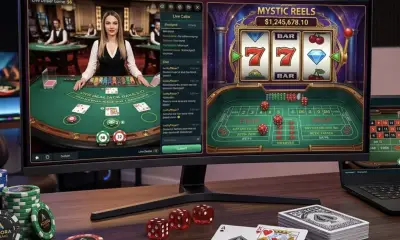
This is very much the model used by many online casinos. Look at any of the providers listed on Casino.org and you’ll find casino games with bonus offers of free stake money and even free slots spins. Once registered and up and running, players soon start to use their own money to play and enhance their enjoyment. In the case of video games, as players get deeper into them, they start to see the value of investing not just time but some money too.
In-game purchases
These are the principal methods of turning a free game into one that makes money. Although these so-called microtransactions are controversial, they are very much here to stay. In fact, there would be very few free games without them.
If we look at the free game that’s downloaded, this can be regarded as the basic model. But once players get into it, they start to see the possibilities for enhancing the gaming experience. This may be by paying for extra lives, getting special weapons, or even having access to extra levels. Although each purchase may cost a fairly insignificant amount, they soon mount up – and it’s this that makes them so controversial.
Subscriptions
Increasingly, these are being used as an alternative to in-game purchases. For a relatively small monthly amount, players can get the kinds of items that they might be buying as in-game purchases.
Advertising
With any video game, you have a captive audience, so that means that it’s the ideal medium to show targeted ads. There’s also the flexibility to show various kinds of communication. The first of these is banner ads. These simply sit on the screen while you play. Then there are the more intrusive interstitial ads. These cover the whole screen and tend to pop up between game levels. The best games use these sparingly, as they can be annoying and disruptive in a game.
Increasingly, games are including rewarded video ads. In exchange for sitting through a 30-second video, players are rewarded with the same kinds of things they might otherwise have to pay for in the form of in-game purchases. So these offer a mutually beneficial situation in which the player gets something and the game developer gets money for hosting the ad.
Plus, just as TV streaming services offer an ad-free experience in exchange for a monthly payment, some games give this option too.
Sponsorship and product placement
There are also more and more examples of free games taking on sponsorship as well as including product placement in the action. The big advantage of this is that it is less intrusive than advertising and represents no cost whatsoever to players. The very best ones feel 100% natural, for example, when racing games are sponsored by car brands and even feature their models in the game.
This neatly fits into the category of product placement, as it does when a lead character in a video game is seen with a branded can of soda. This, incidentally, also makes a game seem more realistic.
Data harvesting
Data is one of the most valuable commodities of recent times, especially as AI is increasingly sophisticated in the way that it can be used. So some developers record every move players make, while also ensuring their individual anonymity. This is information that can be sold to market research firms gathering data about gaming trends – for example, for makers of retro games and emulators who want to update them for today’s players.
A less direct benefit for the developers themselves comes in seeing how their games are played, allowing for enhancements and making them even more popular and lucrative in the future.
So, as you can see, there are plenty of revenue streams even for free-to-play games, and that’s exactly why they’re definitely here to stay.