Persistent studying of open win rates on standard statistical websites often leads average gamers into a dead end. Truly valuable information is hidden within the secret profiles of professional players who test unconventional builds on closed servers or in high-elo solo queue. I regularly track such hidden patterns and notice how seemingly non-obvious decisions by esports athletes become the foundation for future victories. Analyzing their hidden accounts allows you to discover anomalously effective tactics long before they turn into the widely known meta. In my opinion, it is the manual search for such hidden trends that provides a real advantage in ranked matches.
League of Legends: Secret Korean Mid Lane Builds
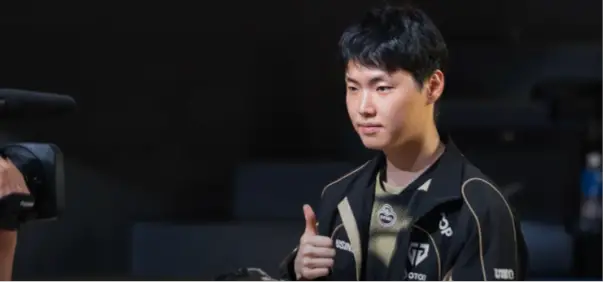
Searching for hidden smurf accounts of Korean pro players on the KR SoloQ server allows you to find broken mechanics long before they appear in public tier lists. I regularly track the match history of leading Korean esports athletes to understand which champions and items are being tested outside of official scrims. In the current competitive season, it was precisely on the Korean server that the trend of breaking the traditional mage build to gain an early tempo advantage originated. Professionals were the first to realize that mobility and additional survivability in skirmishes for objectives provide much more value than the classic expensive purchase for raw damage.
To spot such meta changes in time, simply watching tournament broadcasts or reading official patch notes is not enough. I advise studying the up-to-date competitive EGamersWorld stats in detail, which helps correlate the item choices in closed practices with their actual effectiveness on the professional LCK stage. A detailed breakdown of the numbers often shows that unconventional starting artifacts have a win rate 4-5% higher than the default recommendations from the in-game shop. Such an analytical approach allows you to adopt the working tactics of top players before they become popular among average gamers and lose their surprise factor.
A prime example of this trend was the innovative approach by Gen.G’s midlaner Chovy, who started building Hextech Rocketbelt as his first item on completely atypical mages for this artifact, like Azir. The secret lay in the incredible mathematical value: the Rocketbelt cost significantly less than other core artifacts, provided an excellent health boost, and offered some magic damage. For a minimal amount of gold, the player received a perfect early power spike that combined survivability against ganks, cheapness, and an active dash for aggressive initiation. Top players around the world instantly began repeating this build, securing easy wins while average gamers continued to hoard gold for customary and slow items.
Dota 2: Global Heal and Hidden Abuse of New Aspects on Support Tinker
In competitive Dota 2, true innovations emerge when developers radically rework old mechanics. Monitoring high-MMR matchmaking, I noticed esports professionals returning to support Tinker in a completely different form. Thanks to the Repair Bots aspect, he has turned into an ultimate global healing machine. This updated build was tested exclusively on smurf accounts, while average players considered the hero dead after his old talents were removed.
Top-tier supports quickly grasped the new survivability math, focusing on maximizing healing and dense Defense Matrix barriers. Studying professional match histories, I noticed a complete abandonment of greedy artifacts like Dagon. Instead, players force Arcane Boots with a fast transition into Holy Locket and Guardian Greaves. This Tinker wins the laning stage by absorbing damage, while the Warp Flare spell instantly blinds and pushes back aggressive opponents, breaking any lane initiation.
The main strength of this hidden approach reveals itself in the midgame during key objective sieges. Thanks to the Rearm ultimate, Tinker turns any narrow choke point into an impregnable fortress. Endless waves of March of the Machines, synergizing with the healing aspect, restore colossal amounts of health every second. In prolonged fights, enemies simply lack the burst damage to break this cyclical defense, proving that tracking hidden aspect tests is much more valuable than following the outdated meta.
Counter-Strike 2: The Evolution of Boosts and Hidden Map Control
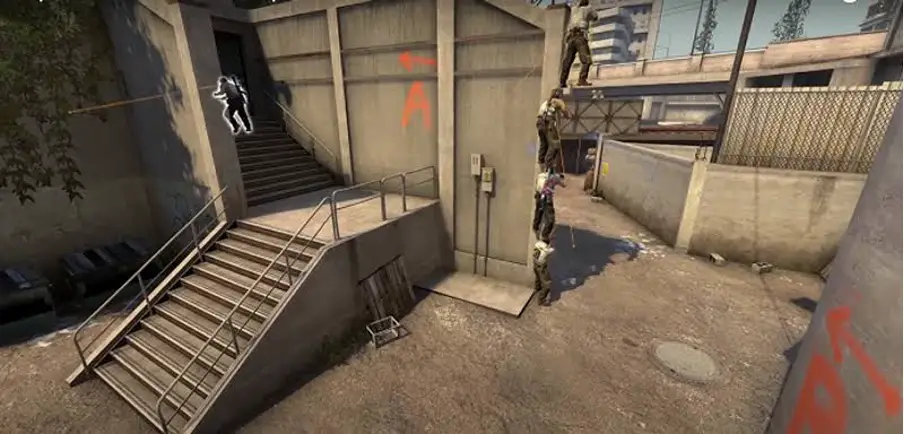
In Counter-Strike 2, map micro-control secrets often hide in the evolution of legacy mechanics. Studying demo recordings on HLTV, I regularly notice top-tier teams like Team Vitality adapting classic boosts on Overpass to the new engine. While utilized sporadically before, in 2026, esports professionals are finding entirely new angles. Excellent examples include aggressive boosts for controlling “monster”, the ABC position, and wild spots behind the toxic barrels on the B site. Professionals calibrate geometry on closed servers to secure easy frags from unconventional heights without taking default duels.
A similar trend is traceable on Anubis, where slight structural changes opened up huge tactical possibilities for the attacking side mid and around the water area. I analyzed recent Team Spirit matches and noticed unconventional deep smoke lineups that completely block the anchors’ vision. These grenades, combined with unexpected boosts on updated textures, allow terrorists to stretch the defense and effectively take over critical map areas.
In my opinion, finding non-obvious vertical positions completely breaks traditional defensive setups. According to global HLTV statistics, Anubis remains one of the most T-sided maps in the competitive pool, with the attacking win rate regularly exceeding the 54% mark. Counter-terrorist anchors suddenly take bullets from unexpected angles or well-placed smokes instead of standard contact executions. This forces the defense to waste their budget on additional clearing grenades, surrendering the starting initiative to the attackers.
Valorant: Non-Obvious Ability Combos in Closed Practices
In competitive Valorant, professional teams often find unconventional agent combinations that remain unnoticed in regular matchmaking. While studying closed scrims and official VCT Americas matches, I noticed squads like Sentinels actively combining Harbor’s abilities with Cypher’s traps on the Sunset map. While average gamers copy default Omen setups, esports professionals use the strict synergy of these two characters to create impenetrable defense zones.
This strategy stayed off the solo queue radar mainly due to the controller’s disastrously low popularity. According to open statistics on VLR.gg, Harbor consistently maintains a pick rate of less than 3% in ranked games. Users often consider him weak due to a lack of hard stopping power, but in professional rosters with established communication, he becomes a perfect tool for masking positions.
Technically, this hidden abuse works through perfect micro-timing. Analyzing Sentinels’ demos, I noticed anchor johnqt coordinating Harbor’s moving Cascade wall exactly during the attackers’ execution, simultaneously activating his Trapwires inside the advancing water barrier. The attacking side physically cannot see the hidden traps, flies into them at full speed, and instantly gets wallbanged. This setup forces opponents to waste up to 30 seconds on a rotation, completely breaking their site execution.
Conclusion
I am convinced that blindly copying popular builds from public websites has long stopped yielding results. True progress in the ranked ladder begins when you analyze the deep tactical decisions and hidden profiles of professional esports players. Naturally, adapting such complex mechanics to your personal playstyle requires time and specific macro-game skills. However, applying these hidden tricks right now gives a massive advantage over opponents who are used to playing by old templates.