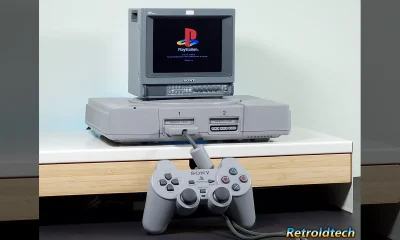
Retro games came from an era when every bit of space mattered. Developers had small screens, limited storage, and very little room for extra detail. Games had to be understood almost instantly. If players didn’t get it quickly, they just moved on.That is why many old arcade titles, platformers, and puzzle games feel so easy to pick up even now. You press start and the goal becomes obvious within moments.

A lot of people connect retro games with childhood memories, but that is not the only reason they still hold attention. Older games often kept things simple in a good way. The screens looked clean, the sound effects had a clear purpose, and every action gave quick feedback. There was very little clutter.
That style still works on sites like PlayRetroGames. Most visitors jump into a game for a short break, test something they missed years ago, or revisit a title they remember from childhood. In those cases, games that feel clear right away usually stand out more than ones that take too long to explain themselves.
Old games had to explain themselves fast
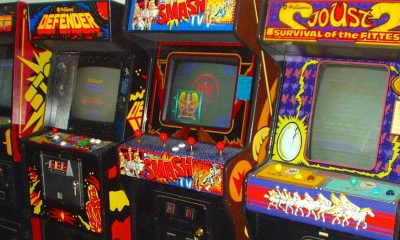
Modern games can lean on tutorials, voice acting, marker-heavy maps, and long onboarding sequences. Early games could not. If a game cabinet failed to make sense within a few moments, a player could simply walk away and spend their coin elsewhere.
That shaped the whole presentation. Enemies had strong silhouettes. Hazards were bright and obvious. Power-ups looked different from background art. Score, health, and time limits sat where players could absorb them without effort. Even when a game was difficult, the screen itself usually stayed legible.
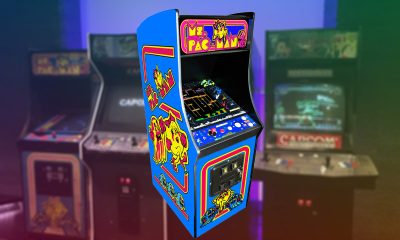
Arcade developers understood that attention was precious. A busy game could still feel readable if each moving part had a clear visual job. Pac-Man shows this better than almost anything else. The maze never feels confusing, the ghosts move in ways players quickly learn, and the pellets quietly pull you from one side of the screen to the other. Then a power pellet appears and the whole pace changes for a few seconds. What felt stressful suddenly feels playful.
Home console games followed the same discipline. Super Mario Bros. teaches running, timing, danger, and reward in its opening stretch without a wall of text. Dr. Mario turns color matching into an idea you grasp almost immediately. Tetris may become fast and punishing, but the pieces themselves are never hard to read. The player’s challenge comes from decision-making, not from decoding the interface.
Visual shorthand did a lot of the heavy lifting
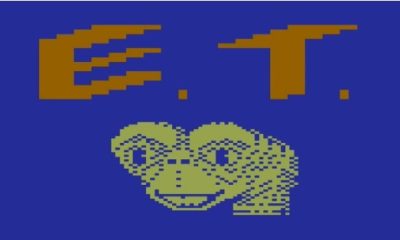
Retro games relied on visual shorthand because they had to. A shape, a color, or a blinking effect often carried the meaning that modern games might spread across animation, menu text, and pop-up prompts.
That shorthand made games easier to enter and easier to revisit. Red meant danger in many action games because it was visible right away. A flashing item suggested urgency or a temporary advantage. Distinct enemy movement patterns told you what kind of threat was on screen before you learned the full rule set. These were not decorative choices. They were usability decisions.
The same design logic still matters now, especially in browser play. People do not always sit down with an hour to spare. They open a game between tasks, during a break, or because they want a quick shot of familiar play. A readable screen lowers the barrier. It removes hesitation.
This is one reason older titles remain so inviting on modern devices. Even when emulation adds a new wrapper around them, the core visual communication is still efficient. A good retro screen tells you where to look, what to avoid, and what is worth chasing.
Sound cues mattered just as much as graphics
People often remember retro soundtracks for their melodies, but the smaller sound cues deserve just as much credit. Audio in older games was rarely wasted. A coin sound, a low-health alert, an extra life tune, or the short chime after a cleared level could tell players everything they needed to know in a split second.
Those effects worked because they were quick, easy to recognize, and connected to moments that actually mattered during play. Players did not have to glance away from the screen to know they earned a reward or that danger was close. In fast arcade games, those audio cues mattered just as much as the visuals.
This is also part of why institutions such as the Computer History Museum and The Strong’s World Video Game Hall of Fame treat classic games as more than old software. They preserve complete play experiences built around sound, timing, and response, not just isolated screenshots.
Good sound design also helped older games feel fair. A warning tone before a boss attack or a crisp effect tied to a successful input reassured players that the game was responding exactly when it should. Even when the odds were against you, the feedback was honest.
Browser play has made those strengths relevant again
Retro games fit browser play unusually well because they were built around short, self-contained loops long before the browser became a popular place to play. You can start quickly, learn quickly, fail quickly, and try again without losing the thread.
That rhythm is part of the reason retro libraries keep growing. A browser session favors games that do not need a long installation, a control remap, or a twenty-minute warm-up before the fun starts. Readable design shortens the distance between curiosity and play.
It also makes older games more forgiving across screens. A lot of games from the 1980s still hold up well on laptops and tablets today because their designs stayed simple in the first place. Large symbols, strong contrast, and clear screens are much easier to adapt to modern displays than layouts filled with tiny details and busy visuals.
For the same reason, many modern indie developers still borrow from retro structure even when their technology is far more advanced. They may use richer art or smoother animation, but they still want the player to understand a game’s logic almost immediately. Older games solved that problem well.
Where that clarity crossed into casino-style play
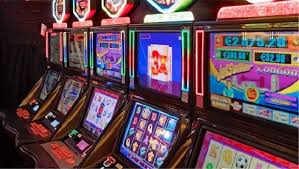
Retro gaming and casino-style design overlap most naturally when we talk about clarity rather than hype. The strongest crossover is not the theme alone. It is the way both formats can deliver instant feedback, recognizable symbols, and short rounds that make sense without much setup.
That is why some players who enjoy arcade-era readability also gravitate toward classic slot titles like 88 Frenzy when they want a session that is simple to parse. The reels, symbols, and pace do not ask for a long explanation. You can take in the symbols, the payline style, and the basic rhythm at a glance, much like a simple retro game that tells you exactly what is going on from the start.
That does not mean the two forms are the same. A platformer or shooter is still built around player skill in a way slot play is not. But the surface design lesson carries over. Familiar icon sets, clean contrast, and direct audiovisual feedback help people settle into a play loop with less friction.
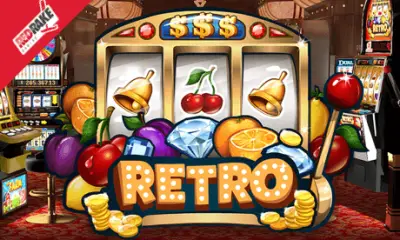
The same idea shows up in plenty of classic slot games that avoid crowded menus and in retro-style releases that keep the screen clean instead of filling it with feature tags, pop-up panels, and nonstop effects. When players can understand the layout right away, everything feels more natural and easy to follow. Once a game forces people to sort through symbols, extra mechanics, and side features before the first few spins even make sense, the flow starts to slow down.
That is one reason 88 Frenzy and other classic slot titles can sit comfortably inside a wider retro conversation. The appeal is not only that they look old-school. It is that they respect quick recognition. They give players a visual language they can understand almost immediately.
Why this still matters for modern game design
The best retro games remind us that clarity is not a constraint. It is part of the fun. A game becomes easier to commit to when the screen speaks plainly, the audio confirms what happened, and the feedback loop stays tight.
That idea reaches well beyond nostalgia or game preservation. Modern developers still run into the same problems: crowded interfaces, too many mechanics at once, and opening hours that overwhelm new players instead of pulling them in. A lot of newer games throw so many systems at the player that it becomes hard to settle into the experience naturally.
Older design approaches offer a different way of thinking. Clear layouts, familiar patterns, and direct feedback helped players learn without long explanations or constant tutorials. Instead of burying people under layers of features, those games relied on simple signals players could pick up quickly and remember later.
Players benefit from that approach too. Readable games are easier to return to after time away. They travel better across devices. They invite experimentation because the cost of confusion is lower. Even when they are difficult, they feel open rather than closed off.
The old hardware did not leave much room for waste, and that limitation produced some of gaming’s clearest design choices. That is a big reason retro games still hold up. Strip away the sentiment for a moment and many of them remain strong because they are simply easier to read, easier to trust, and easier to play.